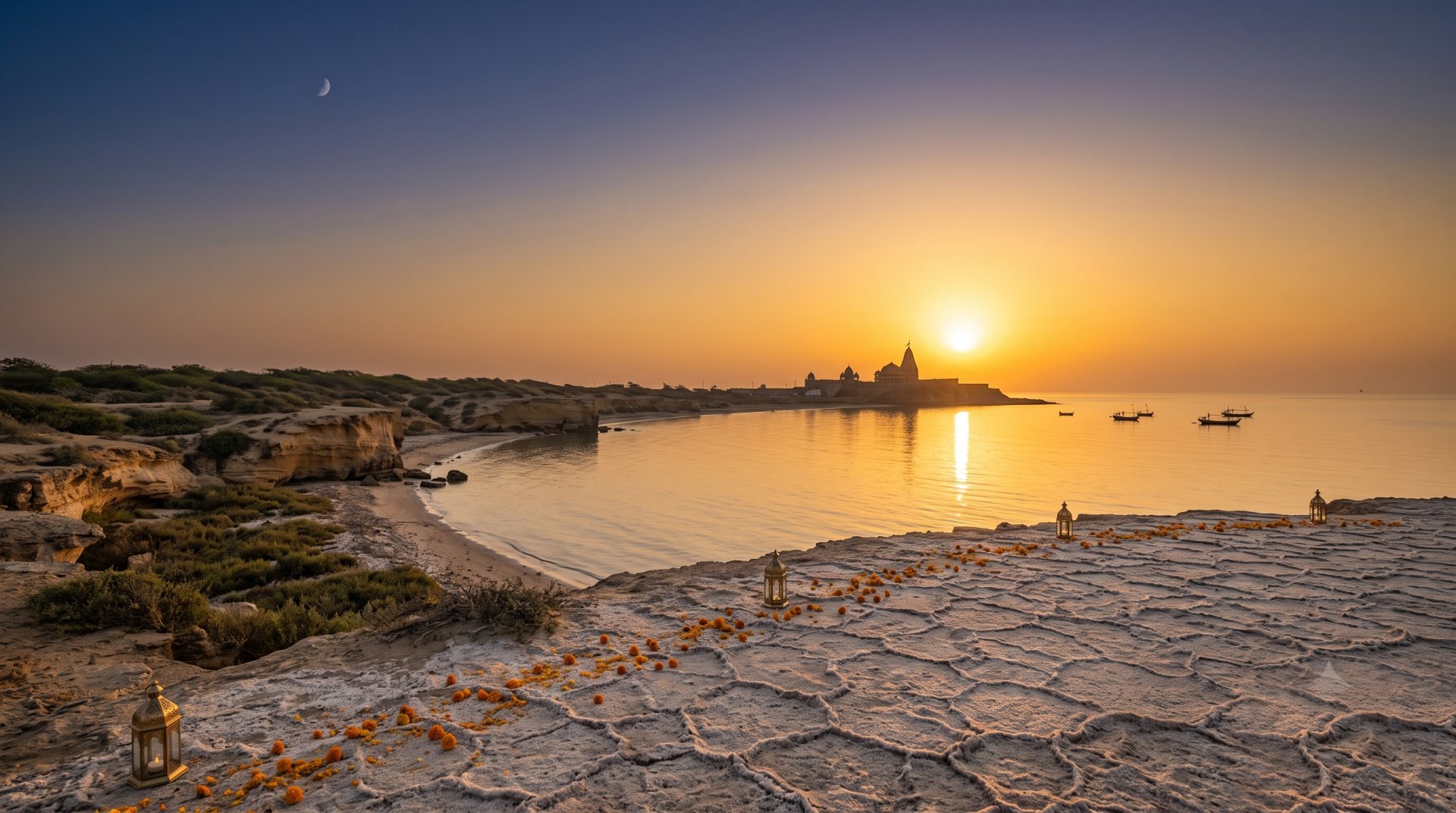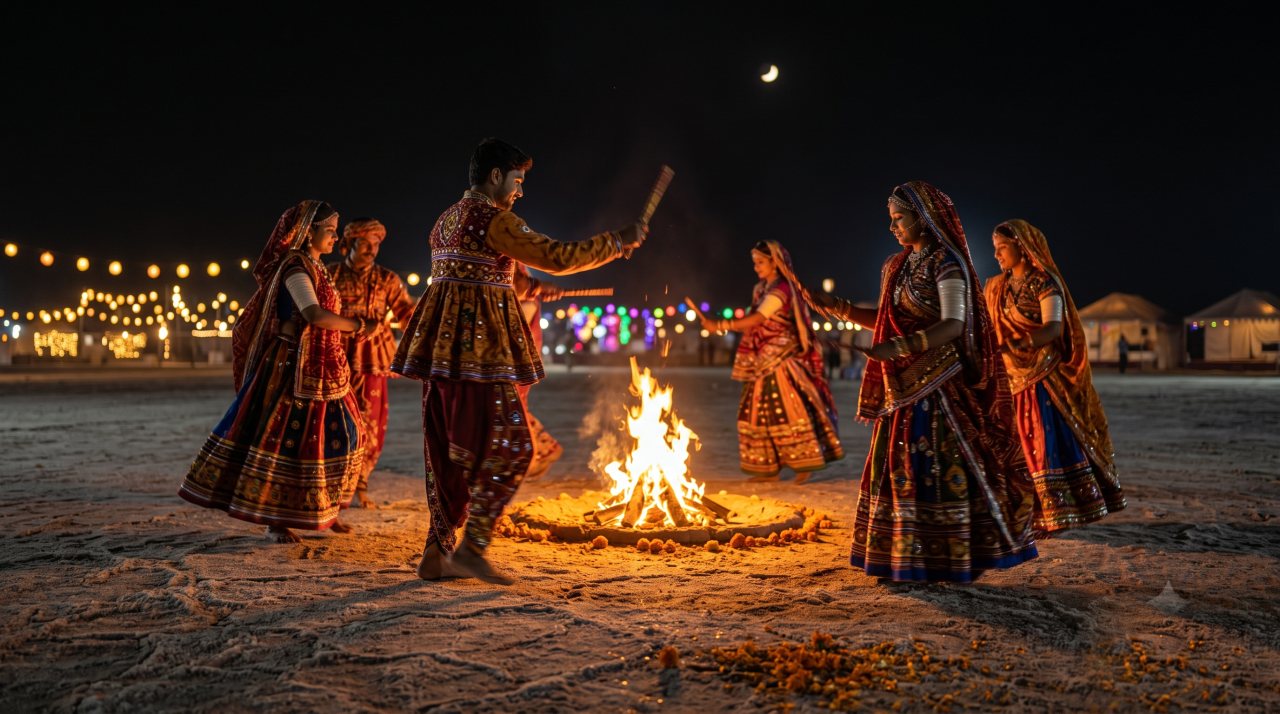
Gujarat runs on a simple seasonal logic: the state is at its best when the desert is dry and the sun is gentle. That window is October to March — when the Rann Utsav fills the White Rann, Gir's safari trails are open, and temple towns like Dwarka and Somnath are comfortable to walk. But inside that window (and outside it), each month has its own personality. Here's the honest month-by-month picture from our operations desk.
October — the season opens
The monsoon retreats, Gir National Park reopens mid-October, and the first cool evenings arrive. Navratri — nine nights of garba — usually falls in this month, and there is no better place on earth to experience it than Gujarat. Hotel rates are still pre-season; a good month for value.
November — the Rann turns white
The Rann Utsav tent city opens at Dhordo and the salt desert is at its crystalline best after the rains. Days are warm, nights are crisp in Kutch — pack a layer. Full-moon dates start selling out from here on.
December — peak season, and worth it
The single most popular month. Rann Utsav in full swing, perfect safari mornings at Gir, comfortable darshan queues at Somnath and Dwarka. Book everything 4–6 weeks ahead — tents, safari permits and heritage hotels all run full around Christmas and New Year.
January — kites over Ahmedabad
Mid-January brings Uttarayan, the kite festival that turns every rooftop in Ahmedabad into a battlefield of colour. Weather stays ideal statewide. Combine the kite festival with a 3-day heritage circuit and you've seen Gujarat at its most alive.
February — the connoisseur's month
Everything December offers, minus some of the crowd. The Rann Utsav usually runs into late February or early March, Gir sightings improve as waterholes shrink, and the Modhera Sun Temple dance festival typically lights up the ancient complex this month.
March — last call for the Rann
The tent city winds down and temperatures start climbing after Holi. Still a good month for Saurashtra's temple circuit and Gir, but plan the Rann early in the month if it's on your list.
April–May — lions, actually
Here's the counter-intuitive one: late summer is the best sighting season at Gir. The forest dries out, lions gather near waterholes, and photographers get their best frames before the park closes mid-June. Elsewhere it's hot — 40°C+ inland — so we keep summer itineraries short: fly in, safari, a sea breeze in Diu, fly out. Saputara hill station is the state's one genuine summer retreat.
June–September — monsoon, for a certain kind of traveller
Gir closes (16 June–15 October), the White Rann floods and becomes off-limits, and long road days slow down. But the Girnar hills and Saputara turn spectacularly green, and Dwarka–Somnath darshan is quiet and unhurried. If your trip is purely a pilgrimage and your budget matters more than the weather, monsoon works — hotel rates are at their yearly low.
The quick answer
- First visit / family trip: December–February
- White Rann / Rann Utsav: November–February, full-moon dates
- Best lion sightings: April–May (park closes mid-June)
- Quiet, budget-friendly darshan: July–September
- Festivals: Navratri (Oct), Rann Utsav (Nov–Feb), Uttarayan (Jan)
Whichever month you pick, the parts that sell out first are always the same: Rann Utsav full-moon tents, Gir safari permits and heritage palace stays. Those are exactly the things our packages lock first.